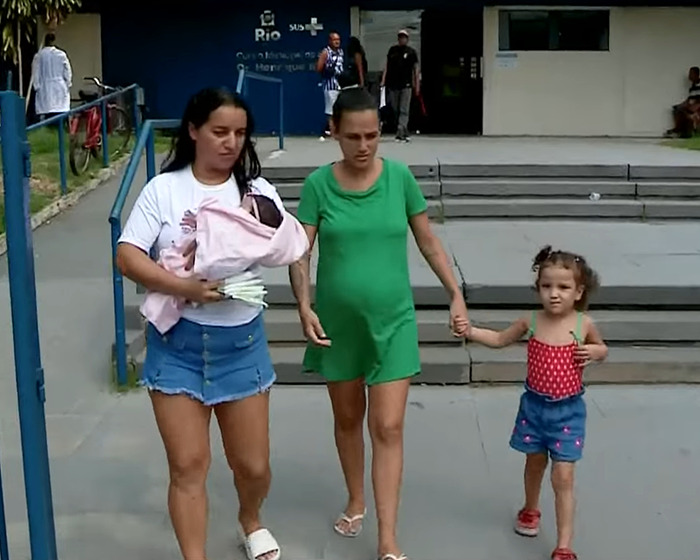
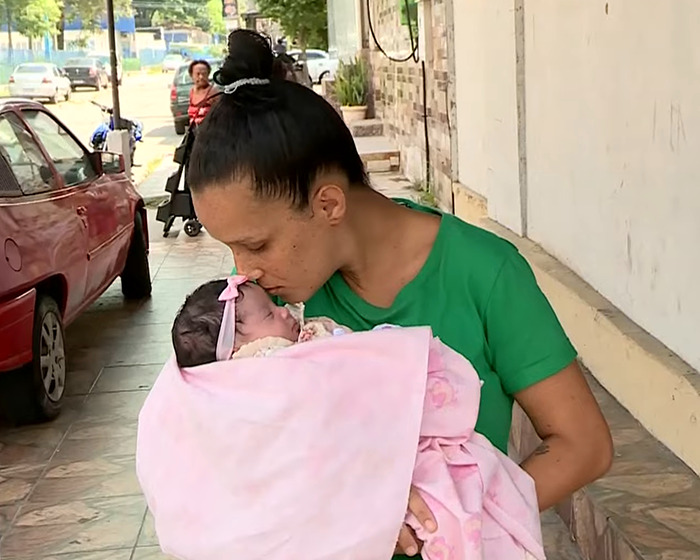
Kathelen Tavares, a mother from Rio de Janeiro, was overjoyed to learn she was expecting twins. Already the proud mother of twin girls, Kathelen followed her prenatal care closely and underwent multiple ultrasounds, all of which confirmed that she was carrying two babies.
But on March 29, after undergoing a scheduled C-section, the joy turned into confusion. Upon waking up from surgery, Kathelen was shocked to find that only one baby had been delivered.
Devastated, she immediately demanded answers. All her medical records, including ultrasounds showing two heartbeats, indicated she was carrying twins. Yet, the hospital staff insisted there had only been one baby all along.
In tears, Kathelen recounted, “They placed my baby on my chest, and I waited for the second one, but it never came. I kept asking what happened, but no one would explain it to me.”
Kathelen’s journey began with a December ultrasound at a public clinic in Realengo, Rio de Janeiro. The scan clearly showed two developing fetuses with distinct heartbeats and different femur lengths—important indicators of fetal growth and gestational age.
Subsequent appointments, including a final check-up at the Hospital da Mulher Mariska Ribeiro just before her delivery, confirmed the twin pregnancy. Even during the emergency labor on March 28, Kathelen was told to bring clothes for two babies. However, something felt off during the delivery. “I was numb from the anesthesia and only heard one baby cry,” she recalled.
After questioning the doctors, Kathelen was told that there had never been a second baby. Confused and heartbroken, she struggled to understand how months of confirmation could be erased in an instant.
The case quickly gained media attention in Brazil, and the Municipal Health Department of Rio de Janeiro launched an investigation. Health Secretary Daniel Soranz revealed that the initial ultrasound had misinterpreted the fetal heartbeat readings, confusing one heartbeat for two. “It was a mistake with the cardiotocography,” he explained.
The hospital staff confirmed only one baby and one placenta had been delivered, and the placenta was sent for forensic analysis to eliminate any doubts.
Though the investigation found no issues during the delivery itself, the family is still struggling to come to terms with the emotional toll of the situation. As the story continues to make headlines, authorities are reviewing the hospital’s records, surveillance footage, and medical staff testimony.
For Kathelen, the heartbreak isn’t just about a medical error; it’s about losing trust in the very system that was supposed to support her during one of the most vulnerable moments of her life. “The doctors need to be investigated,” she said, echoing the concerns of many who followed her story.
As this case unfolds, the family remains determined to get answers and seek accountability for the medical oversight that altered their lives forever.
A Brazilian mother is devastated after months of believing she was carrying twins, only to give birth to a single child.
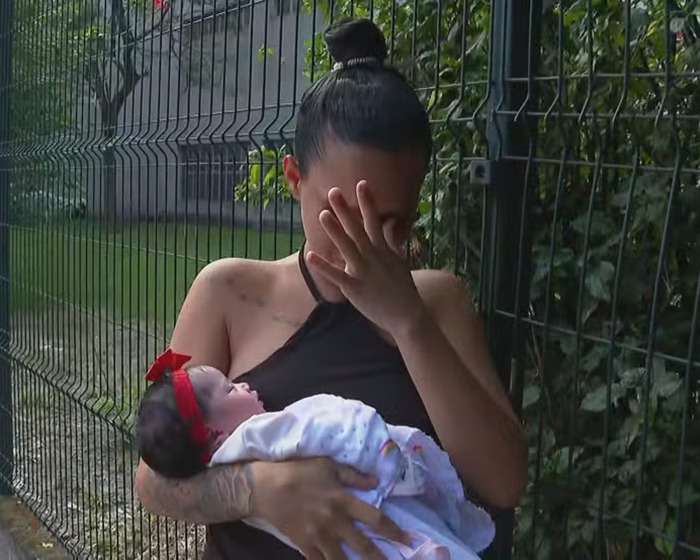

They placed my baby on my chest, and I waited for the second one. But then they told me there was no second baby. I kept asking what happened, but they refused to explain anything to me,” she shared with local media.
Kathelen’s journey began with her first ultrasound in December 2024 at a public clinic in Realengo, a neighborhood in the western part of Rio de Janeiro
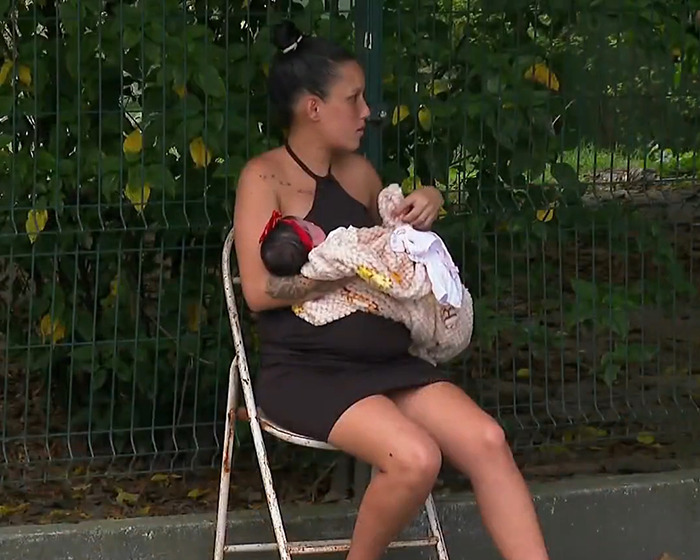
According to Kathelen, the ultrasound clearly showed two developing fetuses, each with distinct heartbeats and different femur lengths—an essential biometric measurement for assessing fetal growth and gestational age.
Subsequent appointments, including a final check-up at Hospital da Mulher Mariska Ribeiro just days before her scheduled delivery, confirmed the same conclusion: she was expecting twins
On March 28, Kathelen’s water broke unexpectedly, and she was quickly rushed to the hospital. Due to the urgency of the situation, no family members were allowed to accompany her into the operating room.
The medical staff instructed her to bring two sets of baby clothes—one for each baby.
But something didn’t feel right.
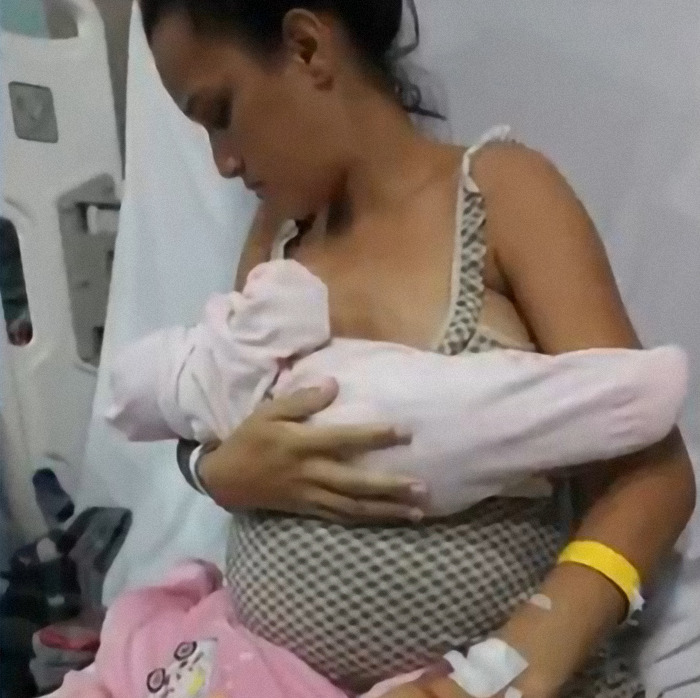
“I was lying there, numb from the anesthesia, and I only heard one baby cry,” Kathelen recalled. “They placed her on my chest, and I waited for the second, but it never came.”
Authorities soon launched an investigation and confirmed that Kathelen had only ever been pregnant with one child.
When she questioned the doctors, she was told there had never been a second baby. Confused and heartbroken, she struggled to understand how months of medical confirmation could be wiped away so suddenly.
As Kathelen’s story gained widespread attention, dominating headlines across Brazil and drawing public support, the Municipal Health Department of Rio de Janeiro initiated an official investigation.
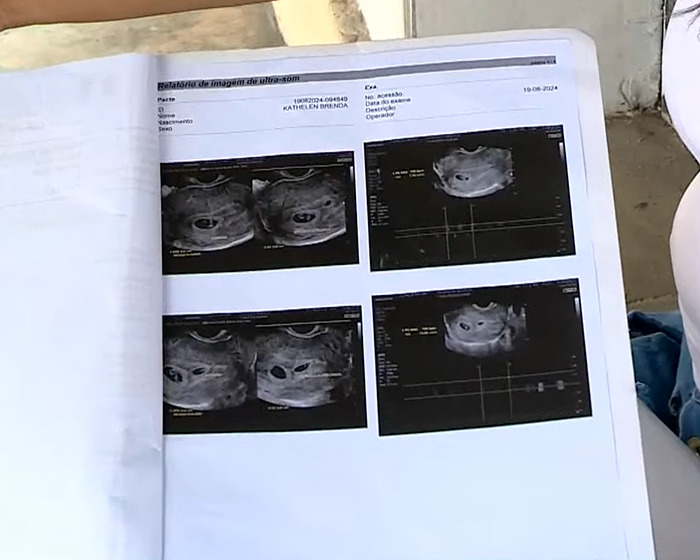
The state’s Health Secretary, Daniel Soranz, revealed the findings of the investigation, which determined that the initial ultrasound had misinterpreted the fetal heartbeat readings, confusing one baby’s heart for two.
“It was a mix-up with the gestational sac and the cardiotocography, the device used to listen to the baby’s heartbeat,” Soranz explained.
He emphasized that the delivery team only found one baby and one placenta. To further clear any doubts, the placenta was sent for forensic analysis.
A new investigation is now underway to identify those responsible for providing Kathelen with false information.
“Unfortunately, it was a mistake with the first ultrasound. There is just one baby; it’s important to make that clear. We want to reassure the family that there were no complications during the birth,” Soranz stated.
While Soranz acknowledged the emotional toll the situation had on the family, the Tavares family is still struggling to accept the explanation.
The case has now been taken up by the 34th Police Precinct in Bangu, where authorities are reviewing hospital documents, surveillance footage, and testimony from medical staff to determine who is responsible for the erroneous information.
As the family continues to seek answers, the hospital’s director has been summoned for questioning by the police.
For Kathelen and her family, this ordeal goes beyond a medical mistake—it’s about trust and accountability in a moment that should have been filled with joy, not confusion and heartbreak.